
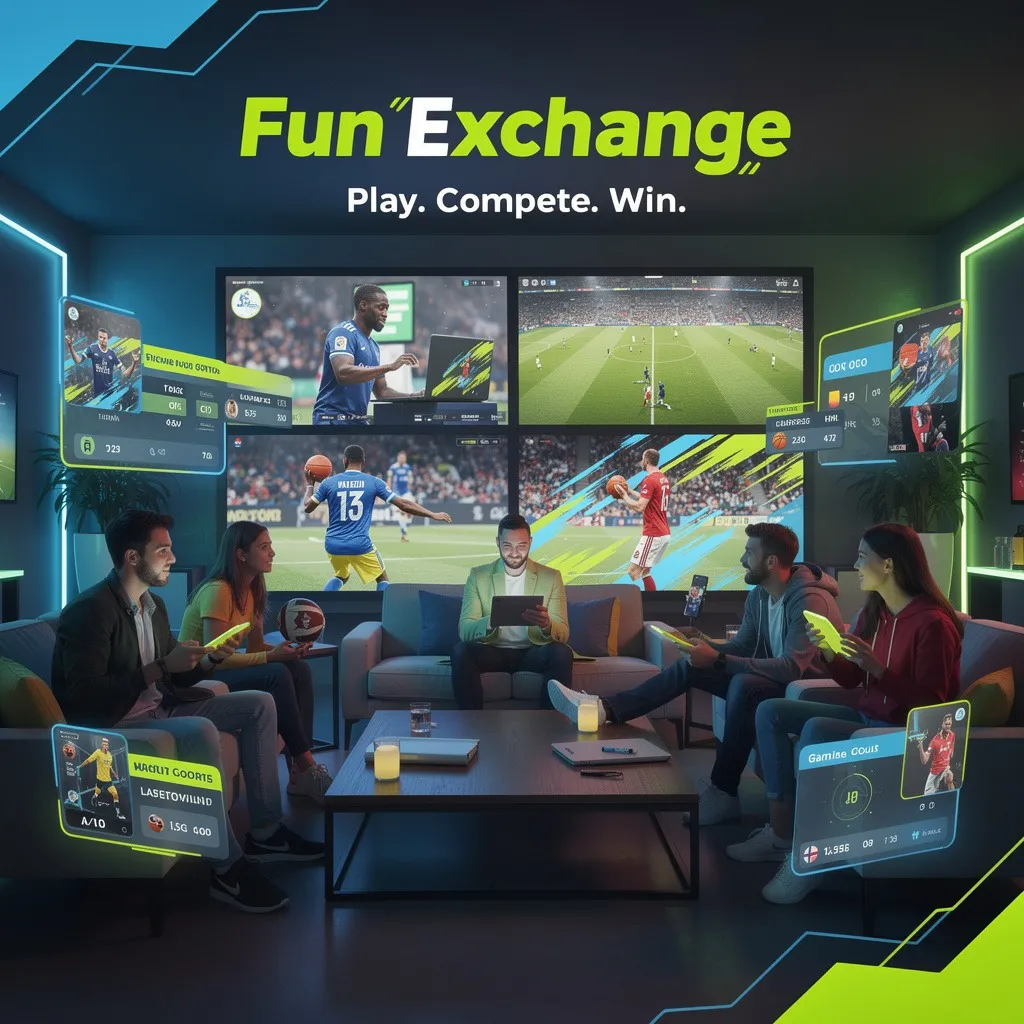
But something profound has happened in recent decades. The spotlight has expanded. It now shines not only on grass pitches and hardwood courts but also on glowing screens, virtual worlds, and digital arenas. The digital gaming revolution has transformed how we experience adrenaline, competition, strategy, and even luck. Games of skill now sit alongside games of chance. Sports simulations rival real-world contests in emotional intensity. Strategic thinking is celebrated as much as athletic prowess. And platforms like Fun Exchange and funinexchange are at the very heart of this transformative era.
In this blog, we will explore the fascinating intersection of sports, strategy, luck, and the digital gaming revolution. We will examine why these elements captivate us, how technology has amplified their power, and why the future of entertainment will be defined by the convergence of these forces. Whether you are a sports purist, a strategy enthusiast, a casual player who enjoys a bit of luck, or someone simply curious about the digital revolution, this deep dive will illuminate the forces reshaping how we play, compete, and connect.
The Timeless Allure of Sports
Sports are often described as the ultimate unscripted drama. No two matches are ever the same. The outcomes are determined by a complex interplay of skill, preparation, physical condition, mental toughness, and—yes—luck. This unpredictability is intoxicating. It is why billions of people around the world watch football, basketball, cricket, tennis, and countless other sports with passionate devotion.
But the relationship between sports and spectators has traditionally been one-directional. Fans watch. Athletes perform. The stadium is the stage, and the crowd is an audience. The rituals of matchday—putting on a jersey, gathering with friends, sharing food and drink, singing team anthems—create a powerful sense of belonging. Yet there is a limit to participation. The vast majority of fans will never step onto the pitch, never make that crucial pass, never score the winning goal.
This is where the digital gaming revolution has changed everything. It has taken the essence of sports—the competition, the strategy, the unpredictable outcomes—and placed it directly into the hands of the fans. Today, you can manage a football club, guide a basketball franchise, build a cricket dynasty, or compete in a virtual tennis tournament. The line between spectator and participant has blurred. And this participation is available not just on matchday but every single day, any hour, any time.
Platforms like Fun Exchange recognize this transformation. They understand that the emotional power of sports can be harnessed and delivered through digital experiences that are interactive, immersive, and deeply engaging. By blending the traditions of sports with the accessibility of online gaming, they are helping to write the next chapter of competitive entertainment.
Strategy: The Art of the Thinking Player
While sports celebrate physical excellence, strategy celebrates intellectual mastery. Strategy has always been a fundamental part of human play. Ancient games like chess, Go, and backgammon were not merely pastimes; they were tests of foresight, calculation, and creativity. They trained generals, sharpened merchants, and challenged philosophers.
In the digital age, strategy has found an extraordinary new home. Video games and online platforms have exponentially expanded the scope and complexity of strategic play. Real-time strategy games demand split-second decisions while managing resources, positioning forces, and anticipating enemy moves. Turn-based tactics allow for deep, contemplative planning. Multiplayer online battle arenas require communication, coordination, and adaptive thinking under pressure.
Digital strategy games have also become more accessible than ever. The same game that might once have required a high-end PC can now run on a smartphone. A player can engage in a quick strategic match during a lunch break or settle in for a long campaign over a weekend. This flexibility has welcomed a vast new audience into the world of strategic gaming.
The appeal of strategy is universal because it taps into our innate desire to solve problems and overcome challenges. When we outwit an opponent, when a carefully laid plan comes to fruition, the satisfaction is immense. It is the same joy a coach feels when a tactical adjustment wins a match, or a chess grandmaster experiences when a long-term sacrifice yields victory. Digital platforms have democratized this joy, letting ordinary people experience the thrill of intellectual triumph on a daily basis.
Fun Exchange and funinexchange have firmly positioned themselves within this strategic gaming landscape. By offering experiences that reward planning, foresight, and smart decision-making, they cater to the millions of players who love to test their wits. The digital gaming revolution is not just about flashy graphics and fast action—it is also about deep, meaningful strategic engagement.
Luck: The Great Equalizer and Ultimate Thrill
No discussion of sports, strategy, or gaming would be complete without addressing the element of luck. Luck is the wildcard. It is the unpredictable bounce of a ball, the sudden gust of wind, the miraculous play that defies all odds. It creates upsets, fuels underdog stories, and keeps outcomes uncertain until the final moment.
In sports, luck often plays a decisive role. A shot may hit the post and go in or rebound out. A referee’s call may go one way or the other. An injury to a key player can change an entire season. Fans understand this. They curse bad luck and celebrate good fortune with equal passion. Luck is woven into the very fabric of sports drama.
In digital gaming, luck takes on many forms. Some games are purely chance-based, like virtual dice rolls, roulette spins, or card draws. Others blend skill and luck in intricate ways—where the best player may not always win, but the smartest player will win more often over time. This balance between skill and chance is what makes games endlessly replayable and emotionally compelling.
Luck is also a great equalizer. In the real world, natural talent, resources, and opportunity are not evenly distributed. But a game that includes an element of luck allows anyone—regardless of background or experience—to occasionally triumph over a stronger opponent. This creates moments of pure joy and surprise that are cherished by players and fans alike.
The digital gaming revolution has taken the age-old thrill of chance and supercharged it. Advanced algorithms now ensure fair and unpredictable outcomes. The anticipation of a random reward, the suspense of a critical card draw, or the heart-stopping moment before a virtual wheel stops spinning—these experiences have been refined into an art form. They are immediate, accessible, and endlessly exciting.
Responsible platforms such as funinexchange understand the appeal of luck while also championing balanced, fair play. They create environments where chance adds excitement without overshadowing skill, strategy, or player agency. This thoughtful integration of luck is a hallmark of the mature digital gaming ecosystem.
The Digital Gaming Revolution: Where It All Converges
The digital gaming revolution is not just about video games. It is a fundamental reshaping of how we consume and participate in entertainment. At its core, this revolution is driven by the convergence of technology, culture, and human psychology. Let’s unpack the major forces at play.
1. The Rise of Interactive Entertainment
Traditional entertainment forms—television, film, books—are largely passive. They present a story, and the audience receives it. Digital gaming is different. It is interactive. Players make choices, influence outcomes, and become active participants in the experience. This interactivity creates engagement levels far beyond passive consumption.
Interactive entertainment spans every genre imaginable. Sports simulations let you live your athletic dreams. Strategy games challenge your intellect. Luck-based games deliver bursts of excitement. Narrative adventures immerse you in rich stories. The common thread is agency—the power to shape your own experience. This is a fundamental reason why online gaming keeps getting bigger, and why digital platforms are capturing more and more of our collective attention.
Fun Exchange has embraced this interactive paradigm fully. By putting players at the center of the action, it transforms entertainment from something you watch into something you do. This shift from spectator to participant is the essence of the digital gaming revolution.
2. The Social Transformation of Play
Gaming was once a solitary activity, but the digital revolution has made it profoundly social. Today, millions of people play together simultaneously, forming guilds, teams, and communities that transcend borders. They communicate via voice chat, share victories and defeats, and build friendships with people they may never meet in person.
This social dimension has elevated gaming into a primary mode of human connection. For many, game night has become as important as matchday once was. Friends schedule regular sessions to play together, celebrate wins, and support each other through losses. The shared experience creates bonds that are every bit as real as those formed in physical spaces.
Platforms like funinexchange leverage this social power. By creating spaces where players can connect, compete, and collaborate, they foster vibrant communities where belonging is automatic and fun is shared. The digital gaming revolution is, at its heart, a social revolution.
3. Accessibility and Inclusivity
The digital gaming revolution has demolished barriers that once limited access to entertainment. No longer do you need to travel to a casino, buy expensive equipment, or be physically fit to enjoy competitive experiences. A smartphone and an internet connection are enough.
This accessibility has opened gaming to a truly global audience. People of all ages, genders, income levels, and backgrounds can now participate. A grandmother in Lagos can play a strategy game against a teenager in Toronto. A factory worker in Jakarta can compete in a virtual football match with a banker in London. The playing field has been leveled in unprecedented ways.
Fun Exchange is built on this principle of inclusivity. By offering accessible, mobile-friendly experiences, it ensures that anyone can join the fun, regardless of circumstance. The digital gaming revolution is a democratization of joy, and platforms that embrace this ethos are thriving.
How Sports Simulations Are Changing Fandom
One of the most striking developments in the digital gaming revolution is the rise of sports simulation games. These are not just simple arcade representations; they are deeply detailed, statistically accurate recreations of real sports. Games like football management simulators allow players to take on the role of a coach or general manager, making tactical decisions, managing budgets, and building a team over multiple seasons.
These simulations have created a new type of fan—one who understands the game not just as a spectator but as a strategist. A virtual manager learns the importance of formations, player fitness, transfer strategies, and psychological motivation. They develop a deeper appreciation for what real coaches and athletes face. This enriched understanding actually enhances their enjoyment of traditional sports.
Sports simulations also allow fans to rewrite history. What if you could manage your favorite team to the championship they never won? What if you could sign the star player who got away? These scenarios provide endless replayability and emotional engagement. Players become deeply invested in their virtual seasons, experiencing the same highs and lows they feel while watching real matches.
The digital revolution has also enabled sports betting-style games and fantasy leagues, which blend sports knowledge with luck and strategy. While these must be approached responsibly, they have added a new layer of engagement for many sports fans. Platforms like funinexchange often host fantasy-style contests, trivia challenges, and prediction games that let fans test their sports acumen against others. The line between knowing the game and playing the game has blurred, and the result is a more active, involved fan base.
The Psychology of Play: Why Sports, Strategy, and Luck Move Us
To understand why the digital gaming revolution is so powerful, we must look at the psychology of play. Humans are hardwired to seek out challenges, solve problems, and experience rewards. Games tap into these primal drives in sophisticated ways.
The Flow State
Psychologist Mihaly Csikszentmihalyi coined the term “flow” to describe a state of complete immersion in an activity. Flow occurs when the challenge level perfectly matches a person’s skill level—not too easy, not too hard. In this state, time seems to disappear, and the person experiences deep satisfaction.
Sports, strategy games, and even luck-based games all have the potential to induce flow. A well-matched tennis opponent, a closely fought chess match, or a suspenseful poker hand can all trigger this state. Digital platforms are particularly adept at creating flow because they can dynamically adjust difficulty, provide immediate feedback, and keep players in the optimal engagement zone.
Fun Exchange understands the importance of flow. By offering a variety of experiences suited to different skill levels and preferences, it helps players find that sweet spot where challenge and ability align. This is a key reason users keep coming back.
Variable Rewards
The psychology of rewards explains why games are so compelling. When rewards are predictable, we quickly lose interest. When they are variable—sometimes big, sometimes small, sometimes absent—our brains release more dopamine and we become more engaged. This is the same principle that makes gambling exciting, but it also applies to slot-like mechanics in casual games, loot boxes, and even sports outcomes.
The digital gaming revolution has refined the art of variable rewards. Sophisticated algorithms ensure that players experience a steady stream of satisfying moments, punctuated by occasional big wins. This creates an emotional rollercoaster that is intensely pleasurable and keeps players engaged for hours.
Mastery and Progression
Humans love to see themselves improve. Games provide clear metrics of progress: levels gained, rankings achieved, statistics improved. This sense of mastery is deeply fulfilling. It taps into our innate desire for growth and self-improvement.
In sports simulations, mastery might mean taking a low-ranked team to league champions. In strategy games, it means climbing the competitive ladder. In luck-based games, it means understanding probabilities and making smart bets over time. The journey from novice to expert is one of the most satisfying arcs in all of entertainment.
Social Validation
Finally, games satisfy our need for social validation. Leaderboards, trophies, achievements, and public rankings all provide recognition. When we win a tough match or achieve a rare accomplishment, we want others to know. This social dimension amplifies the emotional rewards and strengthens our connection to the game and its community.
funinexchange taps into these psychological drivers by incorporating leaderboards, competitions, and community features. The chance to be recognized as a top player, or even just to share a fun victory with friends, adds a powerful layer of motivation.
The Economics of the Digital Gaming Revolution
The digital gaming revolution is not just a cultural phenomenon; it is an economic powerhouse. The global gaming industry generates more revenue than movies and music combined. This economic strength fuels constant innovation, attracts top talent, and ensures the industry’s continued expansion.
Several business models have emerged to monetize digital gaming. Free-to-play games generate income through optional in-game purchases. Subscription services provide access to large libraries of games. Premium games charge upfront. In-game advertising creates passive revenue. And for platforms that include elements of chance or competition, there are often entry fees, prize pools, and sponsored tournaments.
Fun Exchange operates within this dynamic economic landscape, providing value to users while building a sustainable business. Its model is built on engagement, fairness, and the trust of its community. By delivering genuine entertainment, it earns loyalty that translates into long-term success.
The economic impact extends beyond the platforms themselves. Content creators, streamers, esports professionals, game developers, graphic designers, and community managers all make their living within this ecosystem. The digital gaming revolution has created millions of jobs worldwide, and its economic footprint continues to grow.
Responsible Play in the Age of Digital Gaming
With the incredible growth of digital gaming comes the need for responsible play. The same qualities that make games engaging—variable rewards, endless challenges, social competition—can also lead to problematic behavior if not managed carefully.
Responsible gaming platforms prioritize player wellbeing. They provide tools to set time limits, manage spending, and self-exclude if necessary. They promote age restrictions and verify identities to protect minors. They educate players about the risks of excessive play and encourage balance with other life activities.
funinexchange is committed to responsible play. It understands that long-term success depends on maintaining the trust and health of its community. By championing transparency, fairness, and player protection, it sets an example for the industry.
This emphasis on responsibility is a sign of the industry’s maturation. Just as traditional sports institutions now focus on athlete welfare and fan safety, digital gaming platforms are recognizing their duty to protect users. The best platforms see themselves as stewards of their communities, not just providers of entertainment.
The Future: Where Do We Go From Here?
The digital gaming revolution is far from over. If anything, it is accelerating. Several trends will shape the next decade and beyond.
Virtual Reality and Augmented Reality
Virtual reality promises to make digital gaming even more immersive. Imagine putting on a headset and stepping into a virtual stadium to play football with friends from around the world. Or using augmented reality to overlay digital games onto the real world, turning your neighborhood into a game board. These technologies are maturing rapidly and will blur the line between physical and digital play.
Cloud Gaming
Cloud gaming removes the need for expensive hardware. Games run on powerful remote servers and stream to any device, from smartphones to smart TVs. This will democratize access further, making console-quality games available to anyone with an internet connection.
Artificial Intelligence
AI will transform gaming in countless ways. Smarter opponents, dynamic narratives, personalized difficulty, and AI-generated content will all enhance the experience. AI could also help identify problematic play patterns early, supporting responsible gaming initiatives.
Cross-Platform Integration
The walls between different gaming platforms are crumbling. Soon, players on mobile, console, PC, and VR will all be able to play together seamlessly. This will create larger, more vibrant communities and ensure that friends can always connect regardless of device.
Blockchain and Digital Ownership
Blockchain technology is enabling true ownership of digital assets. Players may soon own unique in-game items, currency, or even characters that they can trade, sell, or carry across different games. This could create vibrant player-driven economies within digital worlds.
Throughout all these changes, platforms like Fun Exchange and funinexchange will continue to evolve. They will adopt new technologies, refine their offerings, and deepen their communities. The core promise—accessible, exciting, responsible entertainment—will remain constant even as the forms change.
Conclusion: The Spotlight Shines Bright
The digital gaming revolution has brought sports, strategy, and luck together in ways our ancestors could never have imagined. It has taken the ancient thrill of competition and amplified it with technology. It has transformed passive spectators into active participants. It has built global communities where none existed before. And it has made play a central part of modern life for billions of people.
Sports taught us about passion, loyalty, and the beauty of unscripted drama. Strategy taught us about the power of the mind, the joy of problem-solving, and the satisfaction of a well-executed plan. Luck taught us about humility, hope, and the delicious uncertainty of life. The digital gaming revolution has woven these threads into a single, dazzling tapestry of entertainment.
Fun Exchange and funinexchange are proud to be part of this transformation. By embracing the values of accessibility, community, fairness, and responsibility, they are helping to shape a future where everyone can play. The spotlight is shining brightly on this new era, and there has never been a more exciting time to be a player.
So whether you are managing a virtual team to glory, outsmarting opponents in a strategic battle, or holding your breath as the digital dice tumble, know that you are part of something historic. You are a player in the great digital gaming revolution. The game is on, the world is watching, and the fun is just getting started.